
The Conservation Futures program has been supporting the preservation of farmland since 1982, when King County was the first county in the state to use the Conservation Futures property tax levy to preserve farmland, and it remains a key funding source to this day. Conservation Futures funding has helped protect a wide variety of open space, from saltwater shoreline to river corridors, urban greenspaces to regional parks, backcountry and regional trails, and forests and natural areas.
While historically the program was closely tied to King County’s Farmland Preservation program to purchase conservation easements from existing farms, 2023 marked the start of a new chapter for the Conservation Futures program in relation to farmland projects.
Conservation Futures funding is the primary source for the Land Conservation Initiative (LCI) that seeks to preserve important natural lands and urban green spaces, and to add open spaces in underserved communities.
Instead of protecting existing farms through easements, this year’s Conservation Futures recommendations will help fund the ownership of farmland by nonprofits with a land access mission. The Conservation Futures advisory committee is recommending nearly $8 million, pending final award decision by King County Council, to support farmland purchases by three nonprofits committed to expanding farmland access for underrepresented producers.
To do so, the Conservation Futures program is piloting a new method of funding projects. Rather than giving a government agency or nonprofit the exact amount of funding to buy a specific parcel or easement, this year’s recommendations include dollar amounts to be disbursed when the organizations find a suitable parcel to purchase. This change may help promote equity in farmland ownership, as it can be difficult to secure farmland purchases without upfront cash or connections to sellers.
“Farmland in King County is hard to find, and the advisory committee recognized that to help small organizations they had to think about funding a concept, not a specific parcel,” said Ingrid Lundin, Conservation Futures program manager. “The nonprofits will come back to the committee when they’ve identified that land, to confirm that parcel is in their scope before making the purchase. By making the award now, the nonprofit will be able to act when they find that perfect piece of land, versus having to wait through another grant round to finally secure funding and risk losing the land.”
The three organizations who are recommended to receive farmland purchase funding this year are Viva Farms, Wakulima USA, and the Pacific Northwest BIPOC Farmland Trust. Each group qualified for a Conservation Futures grant because a primary purpose of their nonprofit organizations is to conserve open spaces or natural resources for public benefit.
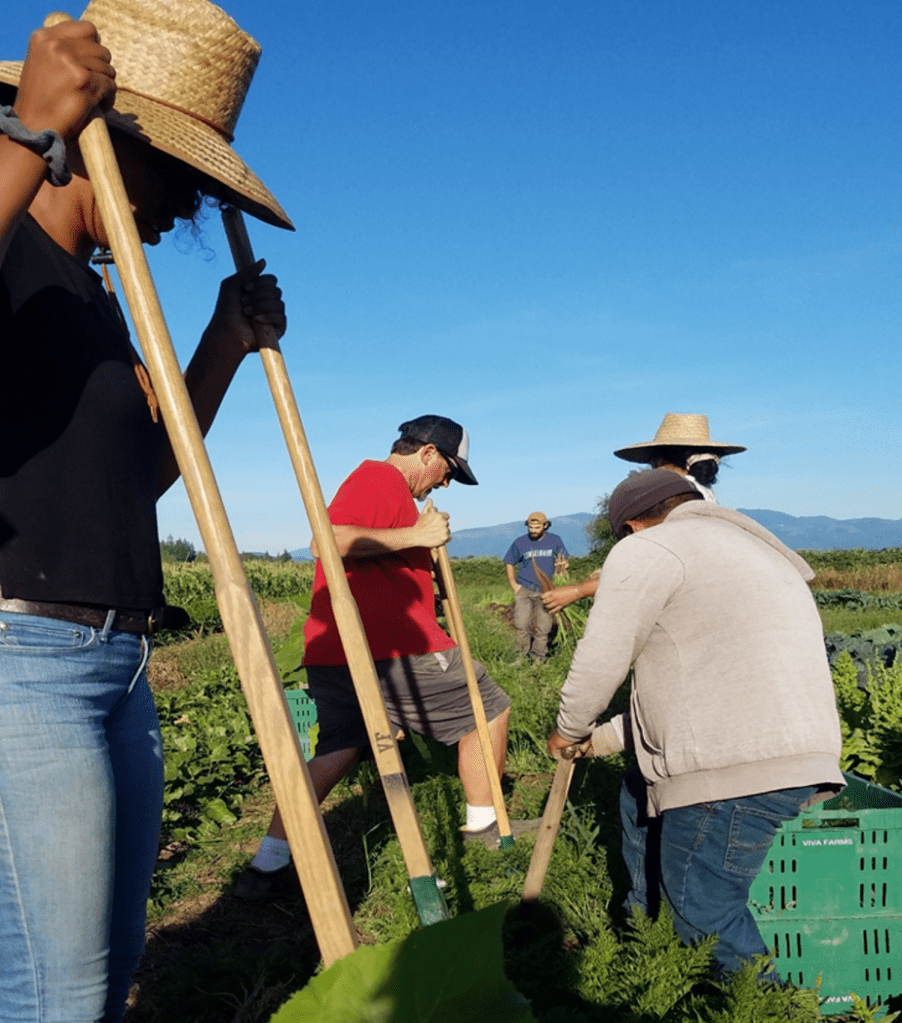
Viva Farms is a farmer-education non-profit that serves limited-resource farmers in northwestern Washington. Currently, Viva Farms runs two incubator farms: one in Skagit County and one in King County. With the Conservation Futures funding, Viva Farms is planning to purchase a large parcel in the Snoqualmie Valley to serve as a space for farmers who have completed the incubator program to have longer-term land access to build their businesses.
Wakulima USA is a farming and food business cooperative that advances small business development and food sovereignty for African immigrants. For the past few years Wakulima USA has been leasing publicly owned farmland from King County. Conservation Futures funding will be used to purchase about 5 acres of farmland in South King County to expand Wakulima USA’s farming program.
The Pacific Northwest BIPOC Farmland Trust is a nonprofit in the process of forming. In partnership with the Washington Farmland Trust, the Pacific Northwest BIPOC Farmland Trust has been recommended to receive $4 million in Conservation Futures funding to purchase the organization’s first 60 acres of farmland.
What all these organizations have in common is a commitment to equity in farmland access, a commitment that is shared by the Conservation Futures Advisory Committee.
“The Conservation Futures Advisory Committee is proud to support opportunities to fund farmland access projects for historically underrepresented groups,” committee chair Catherine Gockel said. “We look forward to seeing these initial projects implemented.”
“The community is very grateful that they have had the opportunity to apply and that it’s being led with an equity approach. It opens the doors,” said committee vice chair Niesha Fort. “As government, we’ve done historical wrongs but we’re open to making proactive changes. I’m excited to see where it goes in the next couple years and to see underrepresented farmers continue living out their dreams and their goals.”
If you would like to learn more about the Conservation Futures program, please visit the website.
 DNRP Field Notes