

One of the easiest actions we can take to help the planet is to reduce food waste. Our Solid Waste Division partnered with regional non-profit Hopelink for Food Waste Prevention Week – April 1-7 – to help spread the word about reducing wasted food. Food Waste Prevention Week is a nationwide effort with 600 partners in 48 states. Many cities in King County became Food Waste Prevention Week partners this year, including Seattle, Bothell, Federal Way, Kenmore, Kirkland, Lynnwood, Renton, Shoreline and Tukwila.
Minimizing food waste is a key part of Re+, our initiative to reinvent the region’s solid waste system and cut greenhouse gas emission produced by our waste.
Why we care about wasting food and how you can help
Many people may not realize just how big of a problem it is to waste food, but those pieces of moldy cheese and stale bread you toss in the garbage can really add up! Food accounts for 18% of what King County sends to the Cedar Hills Regional Landfill. When that food breaks down, it emits greenhouse gases, including methane, which has as much as 100 times more climate warming potential than carbon dioxide. It’s also estimated that the average family spends about $1,500 annually on wasted food.
The good news is there are many simple actions you can take to waste less food, saving you money and reducing your carbon footprint. We have a tons of great tips, guides, and even recipes to help you waste less. Here are some of the highlights:
- Shop your refrigerator first. Set up a “use first” bin and place it at the front of your refrigerator for food that is nearing its expiration date.
- Make a shopping list and take stock of what you already have before you go to the store.
- Plan meals in advance and prepare perishable foods soon after shopping.
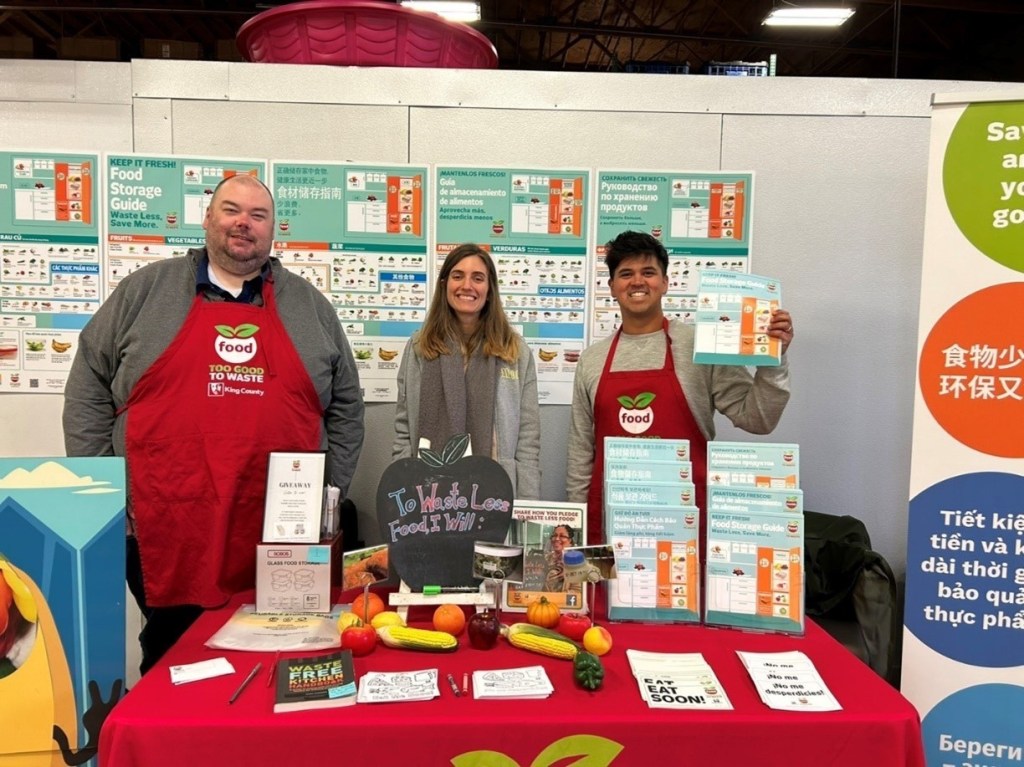
- Store items properly to keep food fresh longer. Our food storage guide has the best ways to store common foods.
Once you’ve minimized your food waste, another important way you can reduce the climate impacts of your waste is by composting. Curbside compost is available to most households in King County, and it has many benefits. Not only does composting turn your food and yard waste create new resources for use in gardens, farms, and environmental restoration, but by keeping food out of the landfill, you drastically reduce the greenhouse gas emissions of organic waste.
King County partners with Hopelink and others to spread the word about wasting food
King County is partnering with regional non-profit Hopelink and their Food Assistance Program on outreach and food rescue efforts. Hopelink provides stability-building programs for people experiencing poverty, immigrants and refugees, and people with disabilities in north and east King County.
The agency’s nine programs work in tandem to fill gaps, supporting each family or individual’s unique needs. These include housing, food assistance, financial assistance, adult education, energy assistance, financial capabilities, family development, and transportation.
Hopelink’s Food Assistance program provides access to free, fresh, and nutritious foods at its five food markets in Bellevue, Redmond, Shoreline, Kirkland, and Carnation, and through a Mobile Market that visits areas with limited options for affordable and nutritious food. Hopelink works with local producers near market locations to provide fresh, locally grown food to their market customers.
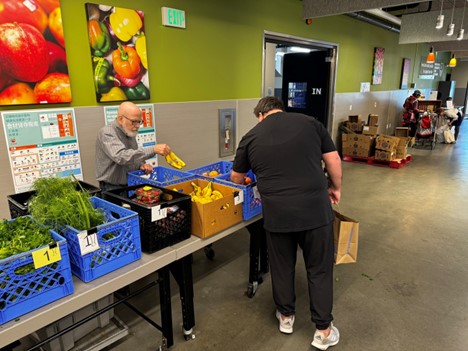
The partnership between King County and Hopelink focuses on in-market engagement, including providing shoppers with resources on food storage, budgeting, and waste prevention.
Our employees visited several Hopelink Food Markets and shared information with customers in multiple languages, including fun events and giveaways, chip clips, “Eat Now” labels, and a food cut-out photo stand for kids.
And we had help from participating cities with some of these events. Employees from the City of Kirkland joined us during our visit to Hopelink’s Kirkland market, while Renton employees lent us a hand at our visit to the Maple Valley Food Bank. We also shared our food waste prevention resources at the Issaquah Sustainability Fair.
If you’re interested in learning more ways to waste less food, our friends at the City of Kirkland discussed the topic and Food Waste Prevention Week on the March 28 episode of the “This Week in Kirkland” podcast. And you can also check out this curated list of resources, including cookbooks, documentaries and more generated by the Kirkland branch of the King County Library System.
 DNRP Field Notes